How Can Concrete Contractors Turn Real Projects Into Stronger Local Search Authority?
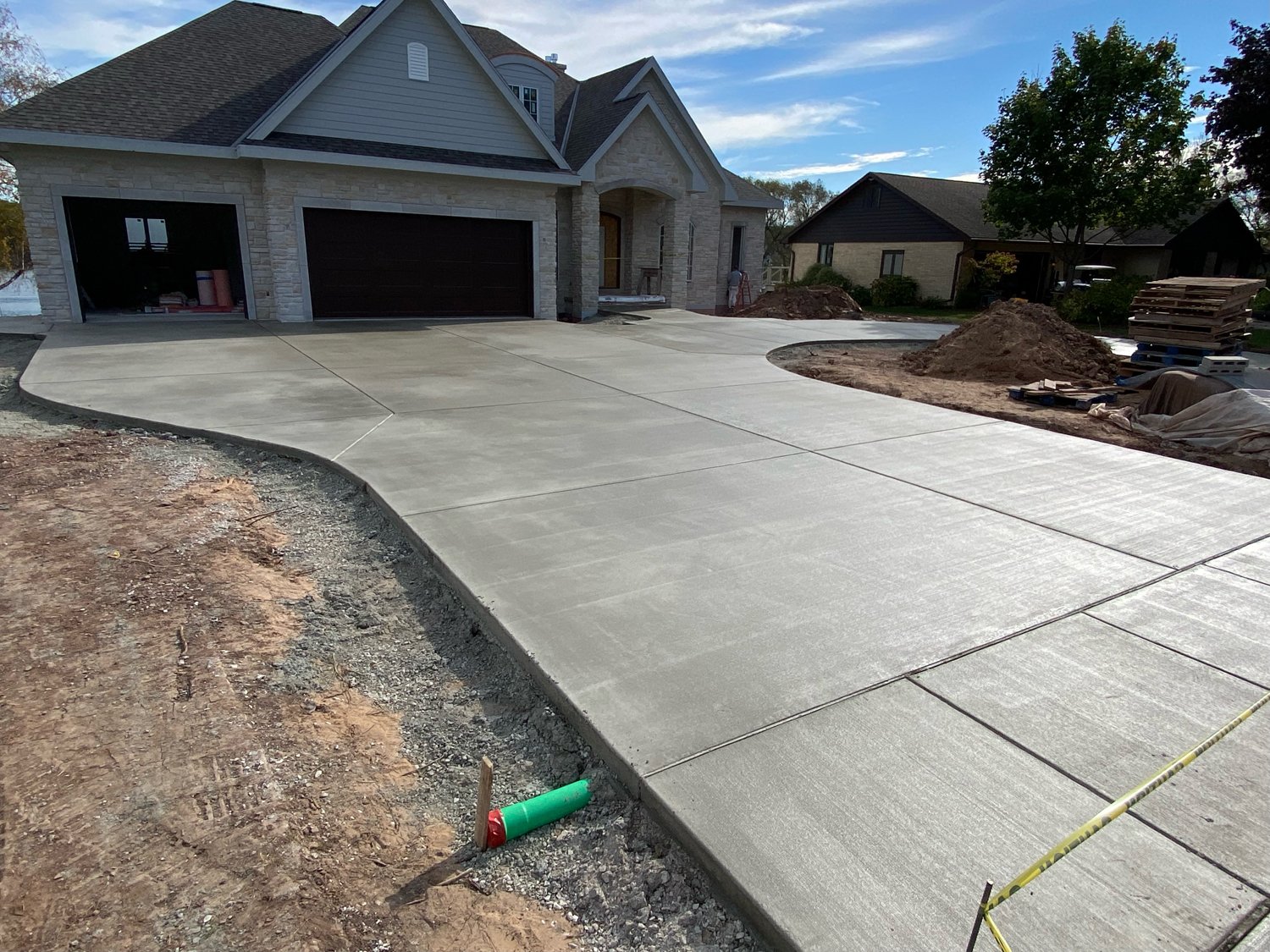
Concrete contractors already produce one of the best local marketing assets available: visible, location specific completed work. A new driveway, patio, walkway, slab, or repair can support Google Business Profile activity, service page relevance, reviews, project galleries, and AI search understanding when the project is documented accurately. The opportunity is not to create a new city page for every job. It is to turn real work into consistent proof of what the company does and where it legitimately works.
Quick Answer
Concrete contractors can strengthen local search by documenting real projects with original photos, specific service descriptions, customer reviews, and accurate service area information, then connecting that proof to strong core service pages and Google Business Profile. Project evidence should add detail rather than become thin location pages. Focus on the actual work, property problem, service performed, material or finish when relevant, and legitimate market context.
Table of Contents
- Concrete is naturally suited to project based local authority
- Start with strong service pages, not endless project URLs
- Use Google Business Profile photos as proof, not decoration
- Ask for reviews that reflect the service experience
- Build project summaries that answer useful homeowner questions
- Use before and after photos with context
- Connect local proof to the right service area strategy
- Make project photos useful for AI search as well as Google
- Create an internal linking loop from proof to conversion
- Frequently asked questions
- Real work is the advantage smaller concrete companies already have
Concrete is naturally suited to project based local authority
Many home service businesses struggle to show what changed after a job. Concrete contractors have a clearer visual story. A cracked driveway can become a finished replacement. A bare backyard can become a patio. A failing walkway can become a safer, cleaner path. A project can show forming, reinforcement, placement, finishing, control joints, cleanup, and the final result.
That evidence is useful to homeowners, but it can also reinforce what a company actually does. The key is organizing it so the website and local profile communicate a consistent business rather than a collection of random photos.
Start with strong service pages, not endless project URLs
Before publishing dozens of project posts, a concrete company should have clear pages for the services that matter most to the business. Depending on the company, that may include driveways, patios, walkways, slabs, stamped or decorative concrete, repair, foundations, or commercial concrete.
Those pages are the core hubs. Project examples should support them.
A driveway project, for example, can link back to the driveway service page with context about the scope. A patio case study can support the patio page. This internal structure helps homeowners move from proof to service information and helps search systems understand the relationship between the project and the company’s core offerings.
This is a stronger contractor SEO model than publishing a near duplicate page for every neighborhood.
Use Google Business Profile photos as proof, not decoration
Concrete photos can show far more than a logo graphic or stock image. Useful profile photos may include the site before work, forms in place, preparation, placement, finishing, edges and joints, and the completed surface.
The goal is not to upload every image from a phone. Choose clear photos that actually demonstrate the service. Keep the business information consistent with the website. Do not attach fake location claims to a job simply to target another city.
If a company serves a broad area, the website should explain that service area accurately and the profile should reflect the real business model.
Ask for reviews that reflect the service experience
Concrete reviews are more useful when they naturally describe what mattered to the customer. A review might mention communication, cleanup, the type of project, schedule management, site care, or the finished result. Contractors should not script or fabricate review language. They can, however, make it easy for a customer to leave an honest review after a completed project.
Over time, authentic review language can help future homeowners understand whether the company handles the kind of project they are considering.
A concrete company with ten generic “great job” reviews tells a weaker story than one whose customers naturally describe driveways, patios, repairs, communication, and workmanship across real experiences.
Build project summaries that answer useful homeowner questions
A project summary does not need to be a long article. It does need to say something meaningful.
Useful details can include:
- What problem the property owner wanted to solve
- What concrete service was performed
- Whether the project involved replacement, new installation, repair, or decorative work
- What site conditions affected the job
- What finish or design details mattered
- What the final outcome changed for the property
Do not invent engineering details, quantities, curing times, reinforcement, or performance claims. Only publish project specifics the contractor can verify.
For larger or more educational projects, a full contractor project case study can become a durable authority asset.
Use before and after photos with context
Before and after galleries are common in concrete marketing, but many are weak because they provide no explanation. A stronger gallery tells the visitor what they are seeing.
Instead of “Driveway Before” and “Driveway After,” the surrounding copy can explain that an aging surface was removed and replaced, that drainage or access influenced the layout, or that the homeowner selected a specific finish. Keep the language factual and project specific.
The image alt text should describe the image naturally. It should not become a list of cities and keywords.
Connect local proof to the right service area strategy
A contractor may complete work in many cities, but that does not mean every city deserves a nearly identical SEO page. A better approach is to prioritize core markets, build useful service area content where there is real business relevance, and use project proof to reinforce genuine coverage.
The service area page strategy for contractors should be based on legitimate operations, not on creating a URL for every ZIP code.
For a growing concrete company, this also matters operationally. Marketing an area the crews do not want to serve can generate leads that look good in a dashboard but hurt scheduling and margin.
Make project photos useful for AI search as well as Google
AI driven search systems work best with specific, understandable information. A website that says only “quality concrete solutions” provides very little substance. A site that clearly explains driveway replacement, concrete patios, repair, decorative finishes, project conditions, service areas, and real completed work gives search systems more useful context.
Project content can strengthen this understanding when it is tied to the business entity and core services. The objective is not to write content “for AI.” The objective is to publish accurate information that humans and machines can interpret consistently.
Create an internal linking loop from proof to conversion
Every project or educational article should help a homeowner move toward a service decision. A driveway project can link to the driveway service page. The service page can link to an estimate or contact path. A supporting article can answer a related homeowner question.
This creates a simple authority loop:
Project proof to service information to estimate request.
That is stronger than leaving project galleries isolated with no path to conversion.
Frequently asked questions
Do concrete contractors need a separate page for every city?
No. City and service area pages should exist when they provide real business value and unique local information. Repeating the same page across dozens of city names can create thin content and a confusing site structure.
Should concrete contractors post every project on Google Business Profile?
Not necessarily. Select strong, representative project photos and updates. Quality and relevance matter more than flooding the profile with nearly identical images.
What should concrete contractors ask customers to mention in reviews?
Do not tell customers what to write. Ask for an honest review of their experience. Natural reviews may mention the project type, communication, scheduling, cleanup, workmanship, or result when those were meaningful to the customer.
Are before and after photos good for concrete SEO?
They can be valuable when they are original, clearly labeled, supported by useful project context, and connected to relevant service content. The photos alone are not a complete SEO strategy.
Real work is the advantage smaller concrete companies already have
National brands may have large marketing budgets, but a local concrete contractor has something difficult to manufacture: genuine completed work in the communities it serves. Documenting that work carefully can strengthen the website, Google Business Profile, reviews, local relevance, sales process, and AI search understanding at the same time.
Local Expertise
Concrete demand, material practices, permitting, weather constraints, soil conditions, and project seasonality vary across U.S. markets. Local content should use verified company and project details rather than generalized regional claims.
Why It Matters
Contractor Optimize evaluates local visibility through the combined lens of website structure, Google Business Profile, reviews, project proof, internal linking, conversion, and AI search clarity. Concrete contractors are especially well positioned to build authority because their work is visual and project specific.
Frequently Asked Questions
The strongest concrete local SEO strategy starts with real services and real completed work. Build clear service hubs, document projects, collect authentic reviews, keep Google Business Profile accurate, and connect proof to conversion. That creates local authority without manufacturing dozens of repetitive location pages.
Get Your Free Contractor Marketing Audit
Get Started