How Should Small Excavation Contractors Qualify Residential Project Leads Online?
Small excavation contractors can qualify residential leads more effectively when their website asks about the actual conditions that determine whether a job fits: project type, property location, access, approximate work area, photos, timing and known site constraints. A homeowner asking for digging may mean drainage, trenching, grading, site preparation or something outside the contractor's scope. The website should clarify that before equipment is scheduled.
Quick Answer
An excavation estimate form should identify the type of work, project address or ZIP code, approximate area, equipment access, photos, desired timing and any known utility, permit or site constraints. Pair that form with distinct service pages for the excavation work the company actually performs. This helps a small operator spend estimating time on projects that fit its equipment, service area and capabilities.
Table of Contents
- Why excavation leads need more qualification than a generic contact form
- Separate excavation services by customer problem
- Ask for project photos before scheduling the estimate
- Ask about equipment access in plain language
- Use real project photos to show capability
- Keep safety and utility claims responsible
- Let the website qualify work while the operator is in the field
- FAQs
Why excavation leads need more qualification than a generic contact form
A request that says “I need some dirt moved” leaves almost every important question unanswered. Is the customer dealing with standing water, a trench, rough grading, a driveway base, site preparation or another project entirely? Can equipment reach the work area? Is the job within the contractor's normal service radius?
For a small excavation business, the wrong estimate can mean a long drive just to discover that access, scope or equipment requirements do not fit. A better website can reduce those dead-end appointments.
Separate excavation services by customer problem
Do not create dozens of thin pages for every phrase someone might search. Instead, build strong pages around genuinely different services the business performs.
Drainage and water-control excavation
Explain the excavation role in drainage work, including trenching and site preparation, without claiming engineering or plumbing services the company does not provide.
Trenching
Customers may need trenches for utilities, drainage or other permitted improvements. The page should explain the contractor's scope, typical access needs and what information is required before estimating.
Grading and site preparation
Grading leads often involve slope, drainage, soil movement, access and the next phase of a project. Show the equipment and types of residential work the company is equipped to handle.
This service architecture supports stronger Contractor SEO because each page answers a distinct customer need rather than repeating a generic excavation pitch.
Ask for project photos before scheduling the estimate
Photos can reveal fences, narrow side yards, slopes, landscaping, retaining features and other access issues. Ask for wide shots that show the route from the street or driveway to the work area, not only a close-up of the problem.
A photo does not replace an on-site assessment when one is needed. It simply helps the contractor understand whether the project deserves the next step.
Ask about equipment access in plain language
Homeowners may not know the width or operating requirements of an excavator. Instead of asking them to select a machine, ask practical questions:
- Is the work area behind a fence or gate?
- Is there a clear route from the driveway or street?
- Are there steps, steep slopes or tight side yards?
- Can the customer provide approximate gate or access width?
The contractor can then decide what equipment may be appropriate.
Use real project photos to show capability
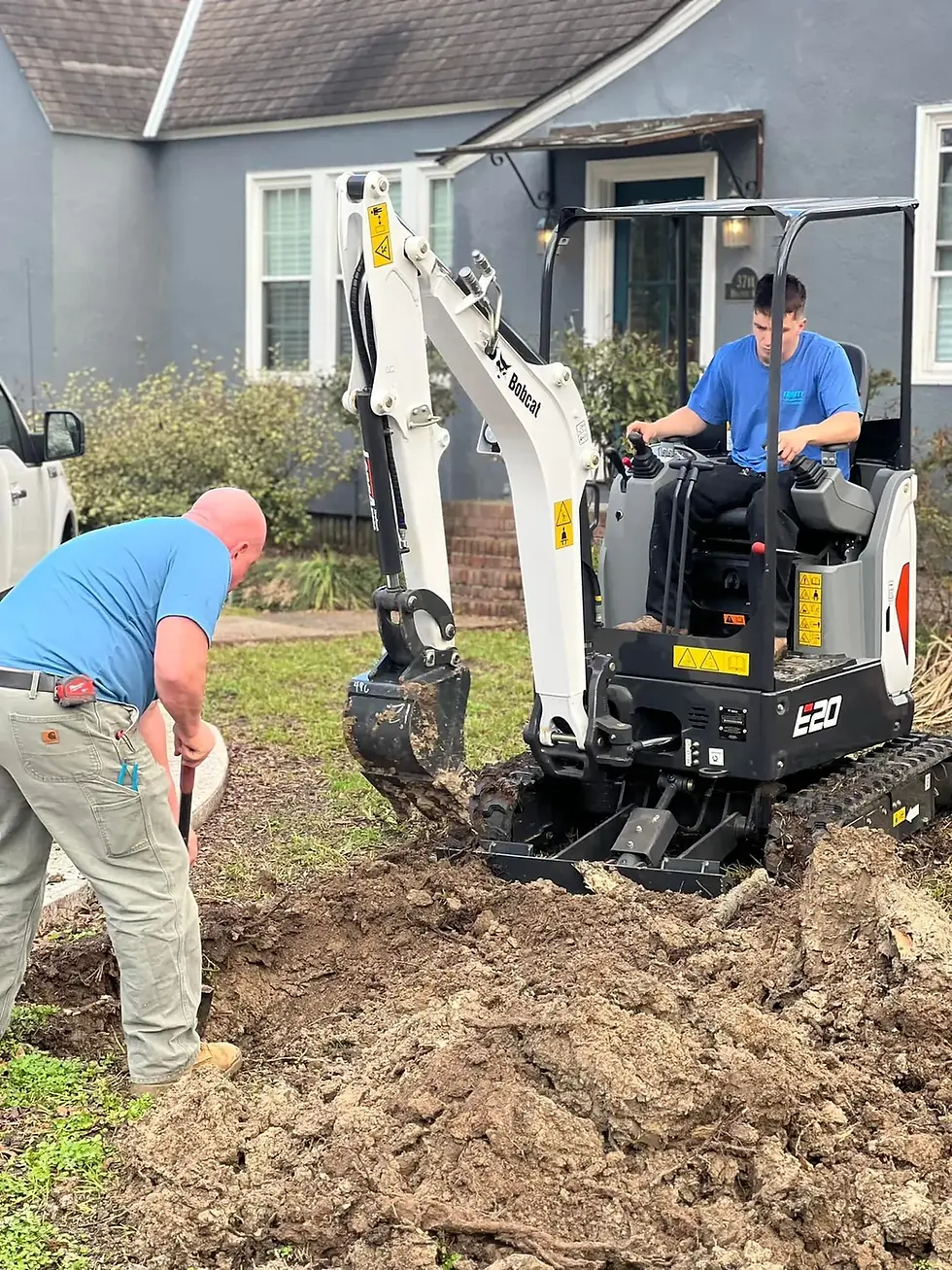
Excavation is visual proof of capability. A useful project gallery should show more than a machine parked on a trailer. Document the starting condition, equipment in the work area, trench or grade, and the completed result when appropriate.
Add short captions describing the type of project and challenge without exposing private customer information. These project examples can become case studies and internal links. See why contractor project case studies build search authority.
Keep safety and utility claims responsible
Do not imply that a website form can determine underground conditions or replace required utility locating, permits, engineering or site-specific professional review. The form should collect known information, while the contractor follows the requirements applicable to the project and jurisdiction.
Trust grows when a contractor clearly explains what happens before digging rather than promising that every project is simple.
Let the website qualify work while the operator is in the field
Owner-operators are often on equipment and cannot stop for every incoming call. A structured estimate form can capture project details while the contractor works, then make follow-up faster.
That is the larger purpose of Contractor Website Design: the site should help market the right services, answer common questions and capture usable estimate requests even when the owner is on a job.
FAQs
What should an excavation contractor ask on an estimate form?
Ask for the project type, location, photos, approximate work area, access conditions, desired timing and any known constraints. Keep the questions understandable to a homeowner.
Should an excavation company have a page for every service?
Create separate pages when services have genuinely different customer intent, scope and questions. Avoid near-duplicate pages that simply swap keywords.
Are project photos important for excavation marketing?
Yes. Real photos can demonstrate equipment access, scale, process and completed results. Captions should explain the project rather than merely naming the machine.
Should excavation contractors publish equipment details?
Useful equipment information can help customers understand capability, but translate specifications into practical context such as access and project fit instead of publishing a machine list with no explanation.
Why It Matters
Excavation marketing should reflect real operational constraints. Access, equipment fit, project scope, site conditions and required pre-dig steps matter more than generic claims about being the best. Useful qualification content helps both homeowners and contractors decide whether a project deserves an on-site review.
Frequently Asked Questions
A small excavation company does not need more vague leads. It needs better project information before committing estimating time. Build the website around distinct services, practical access questions, project photos and a structured estimate request so the owner can identify good-fit work faster.
Get My Free Contractor Marketing Audit
Get Started