
What Should Insulation Contractors Put on Their Website Before Asking for an Estimate?
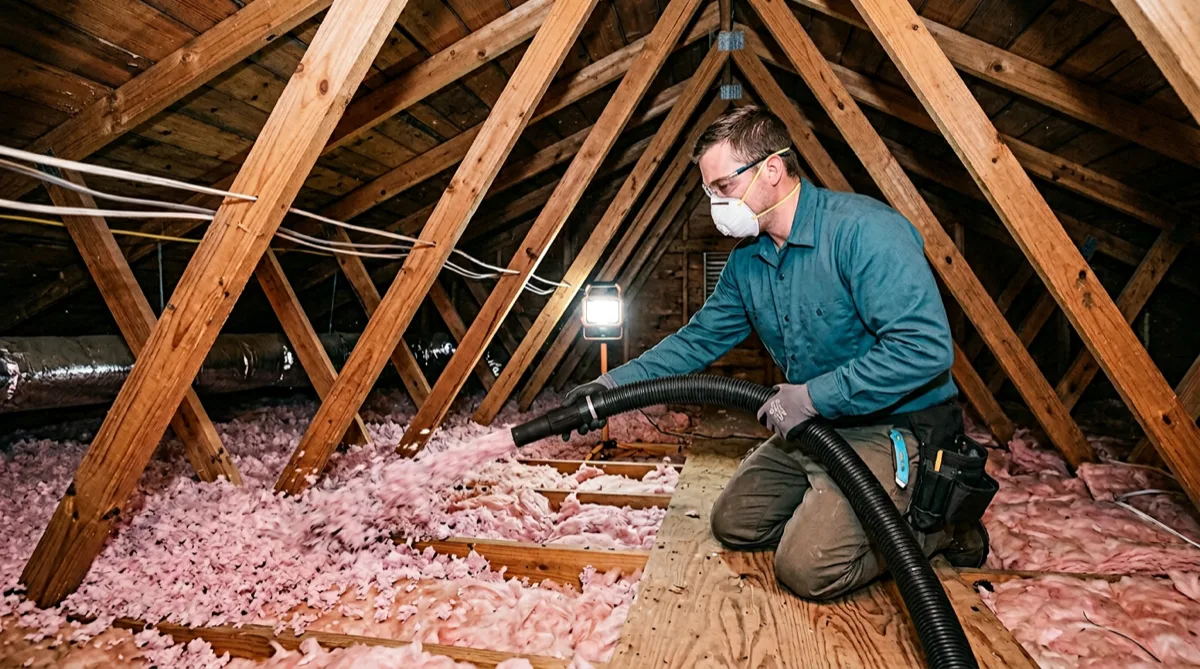
Insulation is difficult for homeowners to evaluate from a finished-room photo. The work may be hidden in an attic, wall cavity or crawlspace, and customers often arrive with broad questions about comfort, old insulation, air leakage or whether an upgrade makes sense. A strong insulation website should explain the inspection and project scope before pushing visitors into an estimate form.
Quick Answer
Insulation contractor websites should clearly separate attic, wall, crawlspace, removal and air-sealing services, explain what is evaluated before an estimate, show real in-progress project proof, identify materials and methods accurately, and avoid promising specific energy savings without evidence. The goal is to make an unfamiliar project easier to understand and the estimate request easier to qualify.
Table of Contents
- Explain What Happens Before a Price Is Given
- Separate the Services Homeowners Confuse
- Show the Work Customers Normally Cannot See
- Build an Estimate Page That Qualifies the Project
- Be Careful With Savings Claims
- Use Project Pages to Build Trust and Search Depth
- Answer the Questions That Delay the Call
- Make Trust Visible
- Turn Education Into a Clear Next Step
Explain What Happens Before a Price Is Given
Many insulation projects cannot be priced responsibly from one sentence on a form. Access, existing material, coverage, moisture conditions, obstructions, removal needs and the actual scope can affect the work.
The website should tell homeowners what the contractor typically needs to evaluate before preparing a proposal. That transparency can reduce low-information inquiries and build trust before the appointment.
Separate the Services Homeowners Confuse
A generic “insulation services” page can leave customers unsure whether the company handles their project. Create clear paths for genuinely different work such as:
- attic insulation
- wall insulation
- crawlspace insulation
- insulation removal or replacement
- air sealing when offered
- new construction insulation
- inspection or evaluation services
The exact architecture should match what the contractor actually sells. Do not create pages for services the company does not perform simply to capture keywords.
Explain the Relationship Between Insulation and Air Sealing
If the contractor provides both services, explain how they differ and why an evaluation may consider both. Keep the language educational. Avoid implying that every home needs the same treatment.
Show the Work Customers Normally Cannot See
Before-and-after content is valuable for insulation, but the most useful photos often show the process rather than a polished finished room.
Examples include existing attic conditions, preparation, protective measures, removal, air-sealing details where applicable, material installation and completed coverage.
Caption the photos. Explain what the homeowner is seeing without inventing performance results.
Build an Estimate Page That Qualifies the Project
An insulation estimate form can collect a small amount of useful information:
- ZIP code
- home type
- approximate age of the property if known
- attic, wall, crawlspace or other project area
- whether existing insulation is present
- the homeowner’s main concern
- optional project photos
Do not require technical information the homeowner is unlikely to know.
Be Careful With Savings Claims
Homeowners may be interested in comfort and energy use, but marketing should not promise a specific percentage of savings unless the claim is properly supported for the situation being described.
A stronger approach is to explain the factors that can influence performance and encourage an appropriate evaluation of the home.
Use Project Pages to Build Trust and Search Depth
A useful insulation project case study can document the starting condition, project goal, work area, selected approach, installation process and finished condition. If measurements or performance data are included, explain how they were obtained.
This gives prospective customers more substance than a generic claim that the company provides “quality insulation.” It also creates natural internal links between educational content, service pages and the estimate path.
Answer the Questions That Delay the Call
Do I need to remove old insulation first?
The answer depends on the condition of the existing material, contamination or moisture concerns, project goals and the installation approach. Explain the contractor’s evaluation process instead of presenting one rule for every home.
Can an insulation company quote a project from photos?
Photos can help with initial context, but some projects require onsite inspection or additional information before a reliable scope can be established.
Should insulation contractors publish material comparisons?
Yes when the company actually works with the materials being compared and can explain differences accurately. The article should help customers understand project fit rather than simply declaring one product best for every home.
Make Trust Visible
Credentials, insurance, relevant certifications, real reviews, original project photos and clear explanations of the installation process can all reduce uncertainty. Put these trust signals near service and estimate content instead of hiding them on an About page.
Turn Education Into a Clear Next Step
The final CTA should match the project. “Request an insulation evaluation” or “Discuss your attic insulation project” can be clearer than a generic “submit” button. The visitor should know what happens after the form is sent.
Local Expertise
Insulation needs and code considerations vary by climate and jurisdiction. Regional content should be based on the contractor's actual service area, project experience and applicable requirements rather than copied climate generalizations.
Why It Matters
Strong insulation marketing demonstrates expertise through accurate service explanations, original project documentation, relevant credentials and transparent estimate processes. Avoid unsupported claims about energy savings, health outcomes or universal project requirements.
Frequently Asked Questions
The best insulation contractor websites reduce uncertainty. They explain what is being evaluated, show work homeowners normally cannot see, separate real service options and make the estimate process feel informed rather than opaque.
Build a Contractor Website That Explains the Work and Wins Trust
Get Started