
How Should Tree Service Companies Build a Stronger Google Business Profile and Local Search Footprint?
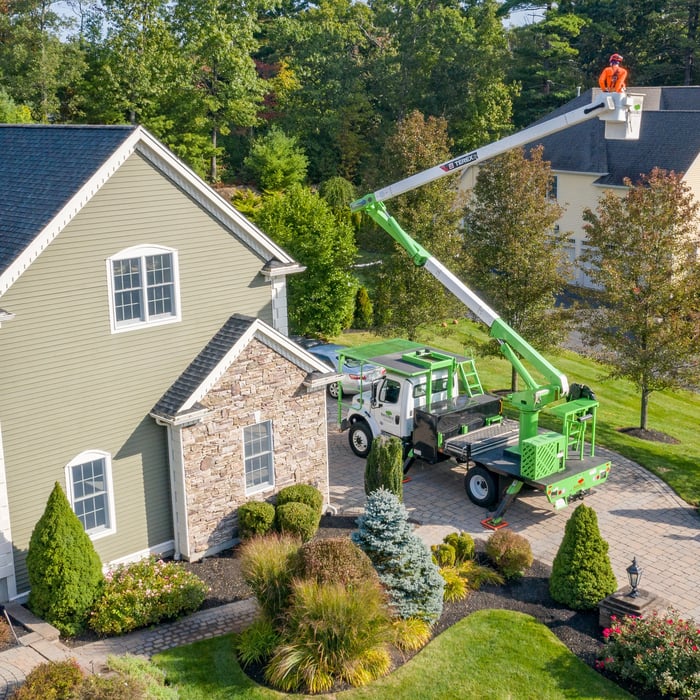
Tree service is unusually local and unusually broad. One customer searches for routine pruning, another needs a hazardous limb addressed, and another is researching removal or cleanup. The company may travel across several communities without maintaining storefronts in each one. That makes accurate local search structure especially important.
Quick Answer
A tree service company should make its Google Business Profile, website and other business references tell the same accurate story about who the company is, what services it actually performs and where it legitimately operates. The goal is not to manufacture locations. It is to reinforce real services, real service areas, customer proof and useful local content so homeowners and search systems can understand the business.
Table of Contents
- Start with one accurate business identity
- Make tree services understandable beyond a category label
- Build service area content only where there is something useful to say
- Connect Google Business Profile activity to the website
- Think beyond traditional blue links
- Frequently Asked Questions
- Build local authority from reality
Start with one accurate business identity
The Google Business Profile should use the company's real business information and represent the business as it actually operates. A service area company does not need to pretend it has offices in every community it serves.
The website should reinforce the same company name, primary contact information, core services and service territory. Consistency helps customers and gives search systems fewer conflicting signals to reconcile.
For a broader framework, see Contractor SEO.
Make tree services understandable beyond a category label
A category alone cannot explain the full business. The website should clearly describe legitimate offerings such as pruning, removal, stump work, storm cleanup or other services the company truly provides.
The Google Business Profile, website navigation and supporting content should reinforce those services naturally. Avoid stuffing every possible city and service phrase into descriptions.
Use photos as evidence of the work you perform
Tree work is visual. Current photos of crews, equipment and completed projects can help homeowners understand capabilities. Images should reflect actual work when possible and should not imply equipment, credentials or services the company does not have.
Let reviews add customer language naturally
Reviews often reveal what customers valued, such as communication, cleanup, scheduling or a particular service. Ask customers for honest feedback without scripting keyword-heavy review text. A believable review profile is more useful than manufactured language.
Build service area content only where there is something useful to say
A tree company may legitimately serve multiple communities. That does not mean it needs dozens of nearly identical city pages.
Useful location content can explain service logistics, common project types, travel considerations, relevant local conditions and actual work in that market when the company has evidence to support it. The service area page guide explains how to avoid thin city swapping.
Connect Google Business Profile activity to the website
The website should remain the deeper source of service information. Profile visitors who need details about pruning, removals or estimates should be able to reach a relevant page rather than a generic homepage whenever practical.
This creates a clearer path from discovery to education to contact.
Think beyond traditional blue links
Local discovery increasingly spans Maps, organic results and AI generated answers. RYNO's current home service marketing content is emphasizing Google Maps and AI search alongside traditional SEO, which reflects how fragmented contractor discovery has become. citeturn0search0turn0search2
Tree companies should therefore focus on clear entities and corroborated information rather than treating one ranking as the entire strategy.
Frequently Asked Questions
Should a tree service create a Google Business Profile for every city it serves?
No. A business should follow Google's eligibility and representation rules and should not create fake or ineligible locations simply to target more cities.
Do service areas replace location pages on a website?
No. They serve different purposes. Website location content can answer useful local questions when there is enough unique value to justify a page.
Should tree companies ask customers to mention a service in reviews?
Ask for honest reviews rather than dictating language. Natural customer descriptions can provide useful context without turning the review process into keyword manipulation.
Does Google Business Profile matter for AI visibility?
Accurate local business information can contribute to a broader digital footprint that search and AI systems may use to understand a company. AI visibility also depends on the website and other corroborating sources.
Build local authority from reality
The strongest tree service local search footprint mirrors the real company: real services, real customers, real markets and real proof. Contractors that want an outside review of how those pieces connect can request a free Contractor Marketing Audit.
Why It Matters
Contractor Optimize treats local search as an accuracy and authority problem, not a city page volume contest. Tree service companies benefit when their profile, website, reviews and service area information reinforce the same real business.
Frequently Asked Questions
Tree service local visibility becomes stronger when the Google Business Profile and website communicate a consistent, verifiable service footprint. Real service detail and customer proof are more sustainable than manufactured locations or repetitive city pages.
Get a Free Contractor Marketing Audit
Get Started