
How Can Vancouver, WA Tree Service Companies Turn Stump Grinding Into Better Local Jobs?
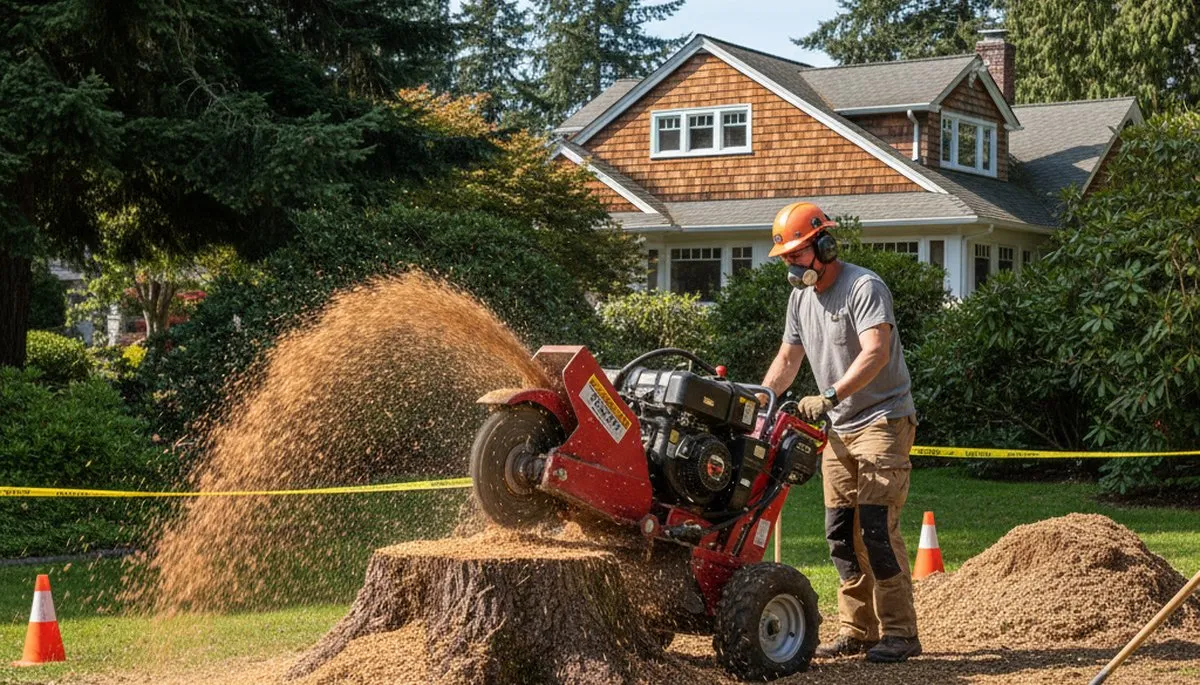
A tree may be gone in an afternoon, but the stump can remain in a Vancouver yard for months. For a small tree service, that unfinished space creates a useful second search intent: homeowners who are no longer shopping for tree removal, but now want the stump out of the way so they can mow, replant, repair lawn or prepare for another landscape project. That deserves more than one sentence buried on a general tree-service page.
Quick Answer
Vancouver tree service companies can win better stump-grinding jobs by treating the stump as its own service intent, not an afterthought. Ask homeowners for stump photos, approximate diameter, gate and machine access, visible surface roots, and what they want to do with the area afterward. Then show clear options for grinding, chip cleanup and yard preparation so customers can understand the scope before an estimate.
Table of Contents
- Market stump grinding as the next decision after tree removal
- Use photos to qualify stump-grinding inquiries
- Build a stump-grinding project gallery, not a generic tree gallery
- Explain grinding versus full stump and root removal carefully
- Create a useful Vancouver stump-grinding lead path
- Connect stump grinding to local search without city stuffing
- Frequently asked questions
Market stump grinding as the next decision after tree removal
Homeowners often think about the stump only after the canopy, trunk and cleanup are finished. A small Vancouver tree company can make that transition easy by explaining what stump grinding does, what it does not do, and what information affects the job.
A useful page or article should answer the questions a homeowner actually has: Will the grinder fit through the gate? How far below grade will the operator work? Are visible surface roots part of the scope? Will the chips stay or be hauled away? Can the area be prepared for lawn or a planting bed afterward?
That specificity is more useful than repeating “professional stump removal” several times.
Use photos to qualify stump-grinding inquiries
Stump work is unusually well suited to photo-first lead qualification. Ask for a wide photo showing the stump and surrounding yard, a closer photo of the root flare, an approximate measurement across the widest ground-level point, and a photo of the access route if the stump is behind a fence or beside a structure.
Ask about access before promising a visit
Vancouver and Clark County properties range from open suburban lawns to fenced side yards and established landscapes. Access can change which machine is practical. An estimate form can ask about gate width, steps, slopes, nearby fences, irrigation components and other visible constraints without pretending a photograph replaces an onsite safety review.
Ask what the homeowner wants afterward
The desired finish changes the conversation. A homeowner who simply wants the stump below grade may need a different scope than someone preparing for sod, a new planting bed, a fence line or another improvement. Tree services can present cleanup and restoration choices clearly rather than leaving the customer to discover them after grinding.
Build a stump-grinding project gallery, not a generic tree gallery
Before-and-after photos are especially useful here because the outcome is easy to understand. Photograph the stump before work, safe equipment setup, the ground area after grinding, and the finished cleanup when appropriate. Add a short caption describing the challenge, such as restricted access or multiple stumps, without publishing a customer's private address.
These examples give Google and AI systems more concrete context about what the business actually does, while giving homeowners visual proof that the company handles the complete job.
Explain grinding versus full stump and root removal carefully
Stump grinding generally reduces the stump and root flare below grade while deeper roots remain and decay naturally. Full extraction is a different, more disruptive scope. A local tree service should explain that distinction plainly instead of using “grinding” and “removal” as interchangeable promises.
That distinction also helps qualify leads. Someone preparing for a shallow lawn repair may have a different requirement from a homeowner planning construction or work that conflicts with roots.
Create a useful Vancouver stump-grinding lead path
A strong conversion path can be simple:
- Explain the service and common project outcomes.
- Show real stump-grinding projects.
- Ask for photos, approximate size, access and cleanup preference.
- Confirm the service area before scheduling.
- Give the homeowner a clear next step for an estimate.
For an owner-operated company, this reduces back-and-forth while the operator is climbing, hauling debris or working on another property.
Connect stump grinding to local search without city stuffing
The local relevance should come from real operating conditions, not repeating “Vancouver, WA” in every paragraph. Discuss fenced residential yards, machine access, wet-season ground conditions when relevant, cleanup choices and the relationship between tree removal and the homeowner's next landscaping step. Mention Vancouver and Southwest Washington naturally where location changes the service or estimate process.
A dedicated stump-grinding topic can then support a broader Vancouver contractor marketing strategy without competing with a general tree-service lead page.
Frequently asked questions
Should a tree company ask for stump photos before quoting?
Yes. Photos can help a company understand approximate size, root flare, surroundings and access before deciding whether an onsite review is needed. They should be used for qualification, not as a substitute for safety checks or utility considerations.
Does stump grinding remove every tree root?
Usually no. Standard stump grinding focuses on the stump and accessible root flare below grade. Deeper roots commonly remain in the soil and decay over time. The exact scope should be explained before work begins.
What should a stump-grinding estimate form ask?
Useful fields include contact information, service address or ZIP code, photos, approximate stump diameter, number of stumps, access details, visible surface roots and whether the customer wants chips left, hauled away or the area prepared for another use.
Can stump grinding be marketed separately from tree removal?
Yes. It represents a different homeowner problem and can attract people with old stumps even when the original tree was removed by another company.
Local Expertise
Vancouver and Southwest Washington residential properties can present very different equipment-access conditions, from open lawns to fenced side yards and established landscaping. The content focuses on access, wet-season ground awareness, cleanup and the homeowner's next use of the space rather than invented neighborhood claims.
Why It Matters
Contractor Optimize recommends service-specific content that accurately explains scope, shows real project proof and collects useful estimate information without making safety, pricing or ranking guarantees.
Frequently Asked Questions
For a small Vancouver tree service, stump grinding can be more than a line item after removal. A focused page, strong project photos and a photo-friendly estimate process can turn an unfinished yard problem into a well-qualified local job while helping the business build deeper tree-service relevance online.
See How Your Tree Service Shows Up Locally
Get Started